
|
Our laboratory has begun to research interactions between caregivers (behavior technicians, teachers, parents, etc.) and clients by using humanoid robots. We program the robot to simulate the behaviors of clients to examine the behaviors of caregivers.
This innovative line of research is very promising in areas of caregiver interactions,training strategies, and assessment procedures. We recently published a study that demonstrates the potential of this line of research by showing preliminary results that the robot is equivalent to a human actor in a paired-choice preference assessment behavior skills training (Kazemi & Stedman-Falls, 2016). If you're interested in finding out, see the following link for an article published by Kazemi & Stedman-Falls (2016): psycnet.apa.org/journals/bar/16/3/135/[KE1] We were featured in an article on RobotLAB!: Click here to read the article |
1st Place Winner of California State University Northridge Artificial Intelligence Jam
2018 |
Some Ways We Use the Robot as a Client Simulator
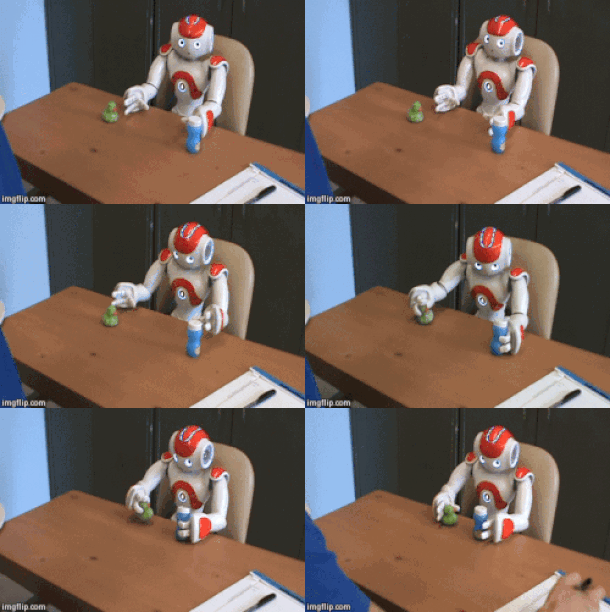
Gif of NAO simulating a client in a paired-choice preference assessment
|
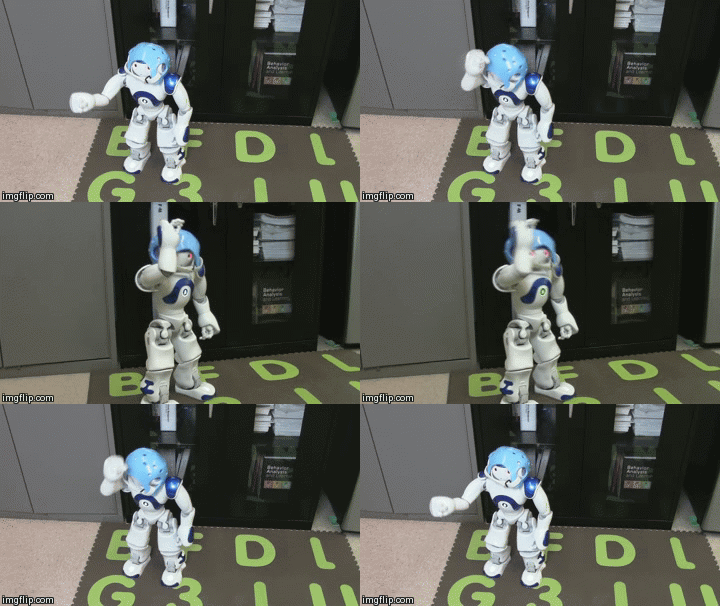
Gif of NAO simulating a child throwing a tantrum with self-injury
|
To increase client and/or caregiver safety by simulating interactions that may be potentially dangerous in real-life scenarios.
To provide immediate performance feedback and make training more practical compared to the conventional lecture-based training.
To train caregivers to implement behavioral procedures with high fidelity before working with real children.
To reliably and validly assess clinical competency of caregivers to examine the effects of training strategies.
To research interactions between caregivers and clients (e.g., child abuse) by simulating the behaviors of the client (which gives us experimental control)
To provide immediate performance feedback and make training more practical compared to the conventional lecture-based training.
To train caregivers to implement behavioral procedures with high fidelity before working with real children.
To reliably and validly assess clinical competency of caregivers to examine the effects of training strategies.
To research interactions between caregivers and clients (e.g., child abuse) by simulating the behaviors of the client (which gives us experimental control)
What is the research evidence of the use of robots for clinical treatment with individuals with Autism Spectrum Disorder (ASD)?
In K-lab, we have not used the robot for this purpose. We recently began a collaborative project with the research department at Easter Seals of California to test the efficacy of using the robot to teach simple tasks to clients with ASD. However, because we are a behavioral science lab that uses robots, we are often asked this question. What we can share is that comprehensive reviews of research studies that have explored the use of robots for ASD treatment (see references below) found that the research evidence is weak and that the data produced by the studies published thus far have not been convincing. In short, robot-mediated intervention studies have not followed standard research designs and lacked the methodological rigor necessary for the clinical community to have any confidence in their results.
Begum, M., Serna, R. W., & Yanco, H. A. (2016). Are Robots Ready to Deliver Autism Interventions? A Comprehensive Review. International Journal of Social Robotics, 8(2), 157-181. Click here.
Diehl, J. J., Schmitt, L. M., Villano, M., & Crowell, C. R. (2012). The clinical use of robots for individuals with autism spectrum disorders: A critical review. Research in autism spectrum disorders, 6(1), 249-262. Doi:10.1016/j.rasd.2011.06.006
Goldsmith, T. R., & LeBlanc, L. A. (2004). Use of technology in interventions for children with autism. Journal of Early and Intensive Behavior Intervention, 1(2), 166. Click here
Begum, M., Serna, R. W., & Yanco, H. A. (2016). Are Robots Ready to Deliver Autism Interventions? A Comprehensive Review. International Journal of Social Robotics, 8(2), 157-181. Click here.
Diehl, J. J., Schmitt, L. M., Villano, M., & Crowell, C. R. (2012). The clinical use of robots for individuals with autism spectrum disorders: A critical review. Research in autism spectrum disorders, 6(1), 249-262. Doi:10.1016/j.rasd.2011.06.006
Goldsmith, T. R., & LeBlanc, L. A. (2004). Use of technology in interventions for children with autism. Journal of Early and Intensive Behavior Intervention, 1(2), 166. Click here
Video presented at ABAI, 2015, San Antonio Texas
Other fields have already taken advantage of simulators.
|
Military
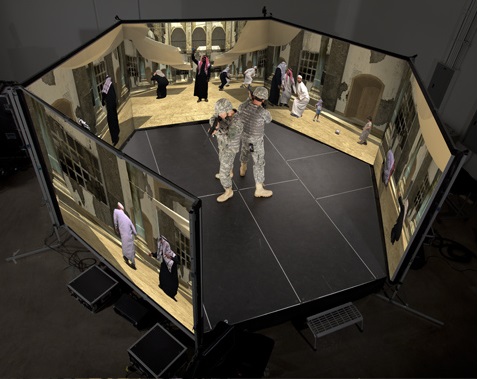
V-300™ MIL by VirTra--A firearms simulator used to train soldiers and law enforcement alike in real scenarios without real dangers. Not only are scenarios simulated, but so are gun shots to the soldier and gun recoil from firing
|
Aviation
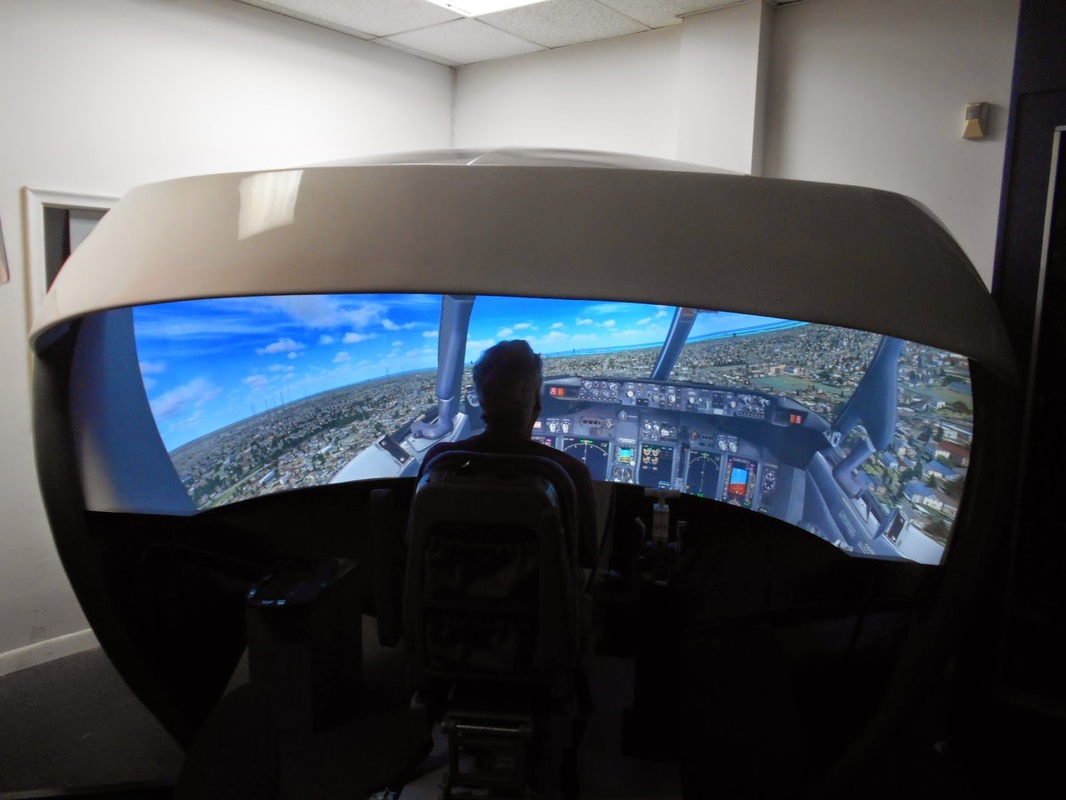
Flight Simulator by Atlantic Models--A pilot can be taken through a multitude of experiences without risking his well being, or the well being of others in simulators such as this. This is a safe method of acquiring necessary skills or to simply practice manning an aircraft
|
Leveraging Technology in ABA
Technology and Behavior Analysis: The Past and Potential Future
https://www.researchgate.net/publication/326798067_Technology_and_Behavior_Analysis_The_Past_and_Potential_Futurewww.researchgate.net/publication/326798067_Technology_and_Behavior_Analysis_The_Past_and_Potential_Future
Introduces the special issue of Behavior Analysis: Research and Practice , which aims to showcase how behavior analysts are leveraging technology to optimize research and practice, disseminate behavior analysis, and extend the reach of behavioral services. Readers of the four papers in this issue are asked to consider new avenues through which technology can assist in advancing behavior analysis and to consider how behavior analysis can reveal its full powers, as the scientific study of principles of learning and behavior, by helping advance the current technology.
Leveraging Technology to Enhance Innovation and Dissemination of Behavior Analysis
Technology solutions are in high demand in a global society that values efficiency. New devices and applications are emerging, which allow behavior analysts to develop and deliver efficient, accessible, and personalized application of our science. However, the cost-benefit analysis should be considered prior to adopting any new technology solution to ensure that automation does not compromise the behavior analytic technology. The members of this panel will discuss their diverse backgrounds and experience in developing and studying the use of technology to enhance the application of behavior analysis (e.g., data collection, e-learning, virtual reality, telehealth). They will also advise on how various technologies can be leveraged to enhance our understanding of behavior and to increase dissemination of behavior analysis in areas such as education, business and industry, and health services.
